

>
Check out other Wordless Wednesday photos.
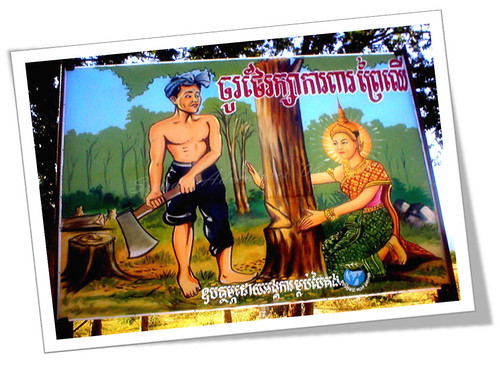
n.b.: Please excuse me, I know it is supposed to be wordless but I couldn’t help but explain the link between Buddhism, Cambodia’s religion, and the forests.
A lot of things has been said about the forests of Cambodia and one thing is for sure – the forests are rapidly disappearing with the country’s opening to a market-oriented economy. Here’s a section of what I wrote years ago:
Forest cover has decreased from over 70% in 1970 to around 35% today (depending on which source you are using), and many globally important mammals such as kouprey, tigers, and elephants are on the path to extinction. The forests, upon which local people depended for firewood, medicines, building materials, and religious or spiritual value, have been ruthlessly destroyed by logging companies.
Given the traditional prestige of Buddhist monks among the population and the natural ecological orientation of Buddhism as a belief system and way of life, monks are a prime target group for environmental education and awareness (EE) programs in Cambodia. They are capable of playing an important social role in guiding local populations in understanding, protecting, and improving the environment and in exerting moral pressure on those abusing the environment to change their behavior. A complementary relationship exists between pagodas (the wats and the watarams – the temples and their compounds) and their villages, instructing and providing guidance for the local populations on ethical and practical aspects of environmental protection, management, and enhancement.
To read more, you can find the whole post about my work with the Cambodian Buddhist monks here.

>Wordless Wednesday #29: Buddhism and Forestry
>
Check out other Wordless Wednesday photos.
n.b.: Please excuse me, I know it is supposed to be wordless but I couldn’t help but explain the link between Buddhism, Cambodia’s religion, and the forests.
A lot of things has been said about the forests of Cambodia and one thing is for sure – the forests are rapidly disappearing with the country’s opening to a market-oriented economy. Here’s a section of what I wrote years ago:
Forest cover has decreased from over 70% in 1970 to around 35% today (depending on which source you are using), and many globally important mammals such as kouprey, tigers, and elephants are on the path to extinction. The forests, upon which local people depended for firewood, medicines, building materials, and religious or spiritual value, have been ruthlessly destroyed by logging companies.
Given the traditional prestige of Buddhist monks among the population and the natural ecological orientation of Buddhism as a belief system and way of life, monks are a prime target group for environmental education and awareness (EE) programs in Cambodia. They are capable of playing an important social role in guiding local populations in understanding, protecting, and improving the environment and in exerting moral pressure on those abusing the environment to change their behavior. A complementary relationship exists between pagodas (the wats and the watarams – the temples and their compounds) and their villages, instructing and providing guidance for the local populations on ethical and practical aspects of environmental protection, management, and enhancement.
To read more, you can find the whole post about my work with the Cambodian Buddhist monks here.

>Wordless Wednesday #27: Karen Women
>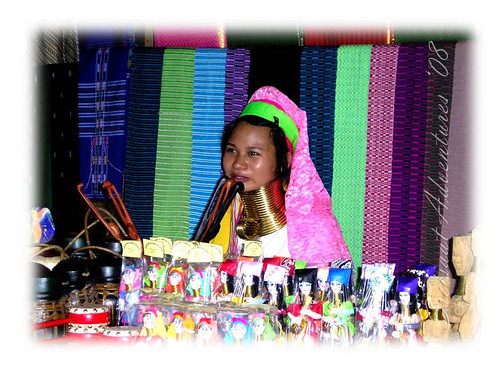
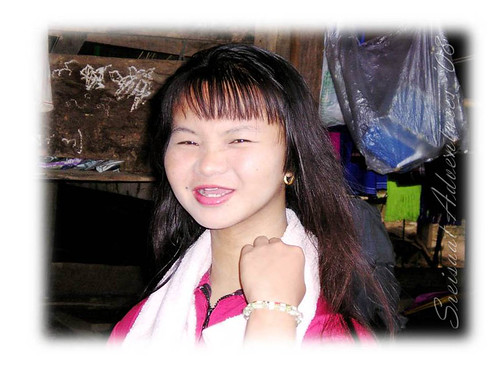
To know more about the Karen people, click here. Don’t forget fab photos of other WW participants at the WW HQ.
>Wordless Wednesday #26 – Rural skyscrapers
>Seen somewhere in China.
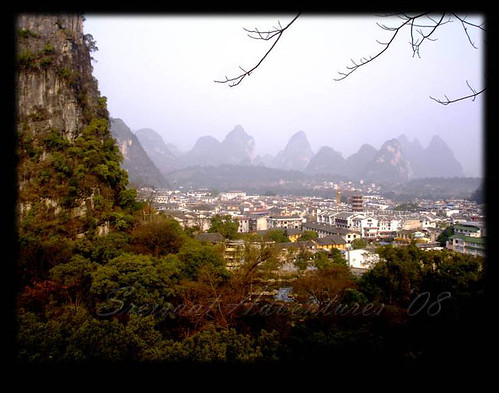
Check out other fab photos at Wordless Wednesday HQ.
>Wordless Wednesday #25 – Nepali beauty
>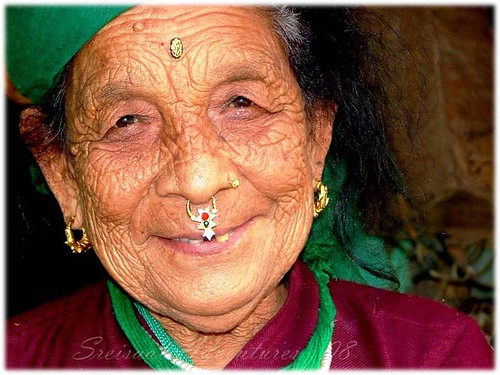
My entry for this week is about beauty. Beauty is in the eye of the beholder. I find this woman to be beautiful despite the lines on her face. In Nepal, especially amongst the many hilltribes, women has the most work at home and in the field. This old woman, whose face is hardened by hard work and, perhaps, hard life because of the raging conflicts, still remains hopeful for her country’s future. Nowadays, more and more women organizations have been mobilizing and building the capacity of women in the grassroots so that they could contribute towards peace building and reconciliation in Nepal.
I’m posting my entry, for the Tuesday-Wednesday edition of Wordless Wednesday, this early because I’ll be out-of-town again for our project meeting. Please check out other entries at the Wordless Wednesday HQ.
A Silver Finish!

Certified!



Follow Us!