

>Photo Hunt #23 – Myself
>

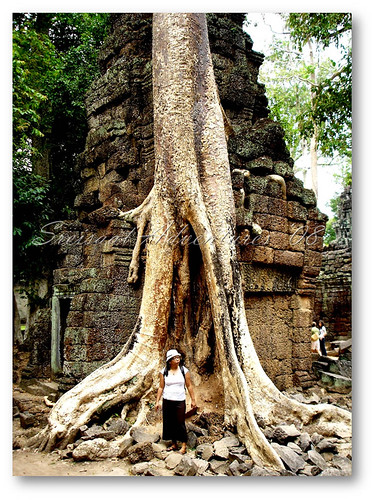
Ta Prohm Temple
Siem Reap, Cambodia
My first visit to Angkor Wat was unforgettable. It was when going to the great land of Angkor Wat, and walking the same path as the ancient Khmers who lived thousands of years ago; seeing the crumbling ruins, some still hidden in the midst of the jungle – unleashed the Indiana Jones in me.
Above is a photo of me at Ta Prohm temple. It is an eerie sight – rubble all over the place with overgrown trees and tangles of tree roots that seem to grab at unsuspecting tourists (see pic) and give it an almost supernatural feel. I got so carried away most of the time, hopping from one pile of rubble to another, that I forgot I was with someone (my husband), and that I was just one of those millions of excited, camera-toting tourists who visit Siem Reap every year.

>Litratong Pinoy #5 – Hangin (Wind)
>
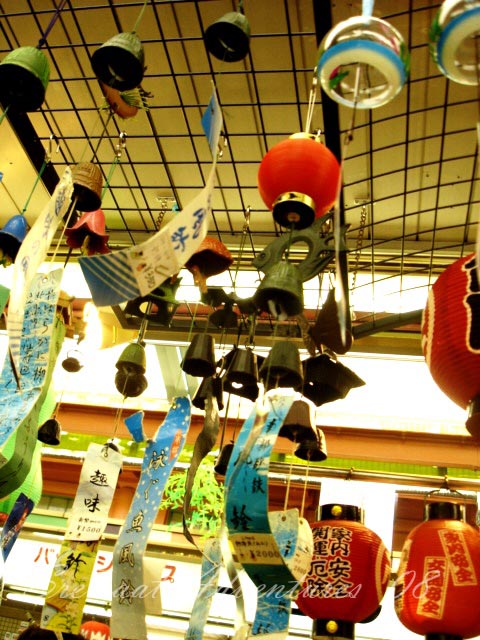
Windchimes from Japan
Ito ay mga wind chimes na gawa sa Japan. Isa ito sa mga karaniwang palamuti hindi lang sa mga temples kundi pati na rin sa mga kabahayan doon. Bakit kaya mahilig sa wind chimes ang mga Hapon? Tinanong ko ang aking kaibigang si Kanako-san at sabi niya, ang mga chimes daw ay naghahatid ng good luck sa mga nakarinig sa kaaya-ayang tunog na nagmumula dito.
Ayon sa isang article sa internet, ang mga Hapon ay in tune sa sounds o tunog, at sila rin ay sinasabing may koneksyon sa hangin na nakapalibot sa kanila. Sinasabi pa sa article na ito na ang dalawang elementong ito ay pinagsasama ng wind chimes. Ang hangin o ang ihip ng hangin ang siyang nagbibigay ng tunog dito. Kaya naman tuwing sasapit ang summer o tag-init sa kanila, isang paraan na nakapagbibigay ng ginhawa sa kanilang pakiramdam ay ang pakikinig sa kaaya-ayang tunog ng wind chimes.
Translation:
These are wind chimes from Japan. I took this photo two years ago when I was in the Asakusa area of Tokyo. Everywhere I went, from the city to the rural town of Kiyosato, I noticed wind chimes in various shapes and sizes. Wind chimes are a common sight not only on the four walls of temples in Japan but also in Japanese homes. I asked my friend Kanako-san to explain to me their fascination on chimes. According to her, chimes bring good luck to anyone who hears the sound it makes and are protected from misfortune.
In an article from the internet, it was said that the Japanese are in tune with the sounds around them, and, they are also connected with the wind. The wind chimes bring these two traits together by taking the wind and creating sound with it. No wonder the Japanese finds it relaxing to hear the pleasant, soft sounds of a wind chime to beat the heat of summer.
>Wordless Wednesday #37: Preparing to Work
>
This is my Wordless Wednesday entry for the Tuesday-Wednesday edition. To join us, go to the Wordless Wednesday HQ.
>Photo Hunt #20: Glass
>
I’m late, but here it is anyway 😀
A shot glass of B-52
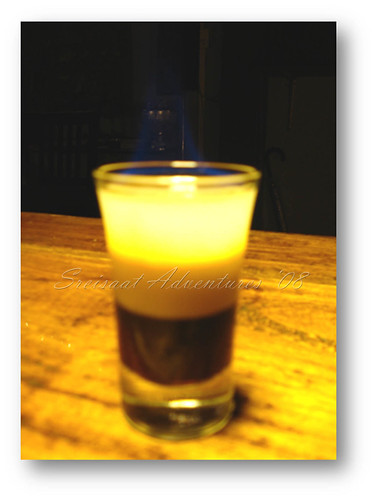
Gone in seconds…
>Photo Hunt #17: I Spy
>
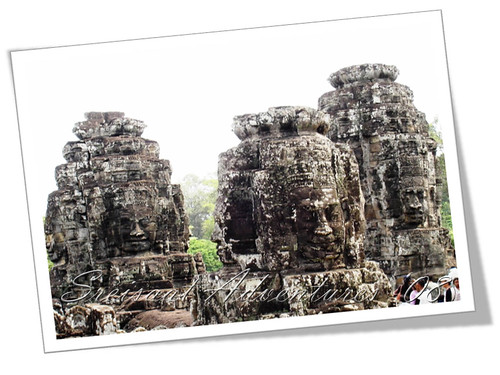
Okay, I am posting my Photo Hunt entry this early to make up for last week. I was meaning to post one but somehow got lost amidst the weekend frenzy, plus I have friends visiting. This week’s theme, I have to say, is one of Photo Hunt’s most challenging themes. One of the PH participants suggested this theme for us participants to shoot a picture of something hidden for the viewer to find. So here’s my take:
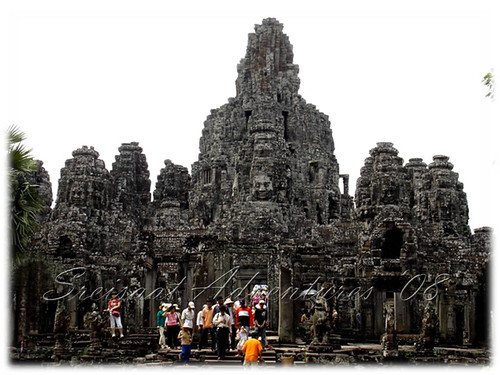
Go get your spyglasses or magnifying lenses and explore the picture a la Lara Croft of the movie, the Tomb Raider. Tell me what you can see in this picture. Can you make anything of it? Click the picture and select large size for your viewing pleasure 😀
I will post on Monday a close up of one of the spires.
Till then, ta-ta. Happy hunting, and have a great weekend!
Update:
The photo above is of the Bayon Temple, one of the popular temples inside the Angkor Wat complex. It was built in the late 12th century or early 13th century as the official state temple of the Mahayana Buddhist King Jayavarman VII. The Bayon stands at the centre of Jayavarman’s capital, Angkor Thom. From afar, as you can see in the photo above, it looks nothing but stones jutting out to the sky.
Click here for a larger view.
But up close, one is mesmerized by the mysticism and the enigmatic expression surrounding the images. Angkor scholars said that that the images have an uncanny resemblance to the King Jayavarman VII.

For those who might want to know more on the temples of Bayon, here’s a good starting point.
A Silver Finish!

Certified!



Follow Us!