

APAD 175: Hard life
In my previous posts, I posted a photo showing the flooded ricefield in one Cambodian province. Apparently, there are areas where the water has subsided a bit. But look at what the rains did to the only only road that links this village to the next.

While the rainy season provides the much-need water for irrigation of crops and domestic consumption, too much of rain also is a bane to farmers, drowning their crops and other sources of livelihood. Such is the life of farmers and villagers in rural areas. While I’m writing this, the sky is getting darker and I can see the rain clouds hovering. Looks like it is going to be a wet, wet afternoon again.
This is my entry to this week’s Our World Tuesday. Click on the logo for more pictures of our world.


APAD 173: Hey, WAIT up!
This week’s theme over at Photo Hunt is quite challenging – WAITING. I could not find something that would fit into this theme so I had to really dig deeper into my photo vault and – voila!

Taken inside Banteay Kdei, one of the ancient temples found inside the Angkor Wat Archaeological Park in Siem Reap province. Banteay Kdei is one of the lesser known temples there – and very few people go there – but it’s as old and as interesting as the more popular Angkor Wat, Bayon, and Ta Prohm temples. We were hopping from one temple to another and I could not keep up with my husband. He was too busy taking pictures to even realise I was lagging behind. I didn’t like being left alone amidst the rubbles. It felt odd and eerie, even at broad daylight, so I yelled at him to wait for me. And that’s how this photo was taken.
You will find more photo hunters here:

APAD 172: Flooded ricefields in the Cambodian countryside
Due to heavy monsoon rains in the countryside, most ricefields have already been flooded and damaged, like the one below. Dotting the flooded area are sugar palm trees.
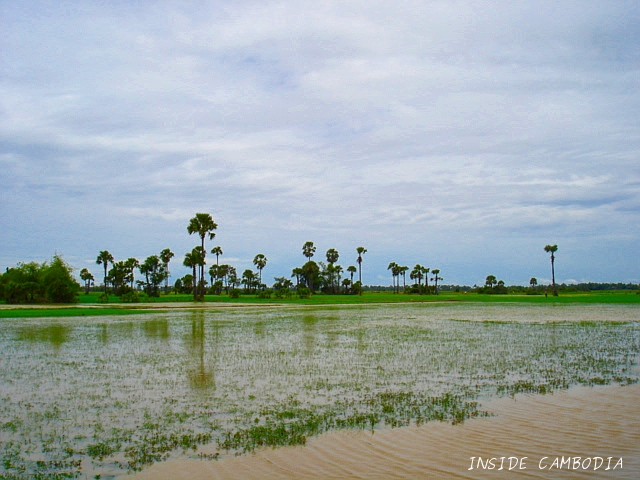
The ricefield looks beautiful, isn’t it?
To many unknowing foreigners, this is a very exotic, postcard-pretty sight.
But – and a big BUT – rice plants that are submerged in water for more than two days will die. And if this happens to the rice crop of the many affected farmers around the country it is going to be a huge disaster! I couldn’t help but imagine how many families will experience food shortage and, possibly, starvation.
Please do give something. Contact the Cambodian Red Cross or any non-government organisations, both local and international, to inquire how you can help.
For more SkyWatch photos worldwide, click this logo below.

APAD 168: A Buddhist shrine
Somewhere in the thick forest of the Angkor Wat Archaeological Park in Siem Reap stands this Buddhist shrine. Although the shrine is not as old as the Angkor Wat and other temples inside the complex, a lot of visitors come to pray and bring offerings, most especially the locals.

An elderly achar, or a layman, comes to the shrine everyday to keep it maintained, making sure that the place is clean, the offerings and flowers brought by visitors are arranged well, and that incense sticks continuously burn at the altar. When he is not busy doing his chores, or, upon special request, the achar entertains his visitors by reading their palms and telling their future. Pleased visitors leave him some amount as donation.
When I visited the temple again about two years ago, I saw the achar hunched and picking up dead, fallen leaves. I lingered for a bit and engaged him in a chat. He is not usually alone, he told me. Every afternoon, the elders – his neighbours – that live in the area come by after their siesta to keep him company. Sometimes his young grandchildren also come by, bring him snacks and hangout with him, too. I wanted to ask him some more, about why he continues to do this unpaid work despite his age… about what he thinks about the changes that the ancient temples had undergone… but a new batch of visitors came and he was on his merry way to greet them. I didn’t even get the chance to take his photo. Maybe next time.
If you happen to visit Angkor Wat, please try and visit the shrine. The achar would love to meet a new friend.
More Mellow Yellow Monday entries here (please click logo):

APAD 157: The serene Stung Sen
This is Stung (river) Sen in Kampong Thom province. It is an important part of the people living along it. Tonle Sen is a major tributary of the mighty Tonle (river) Sap.
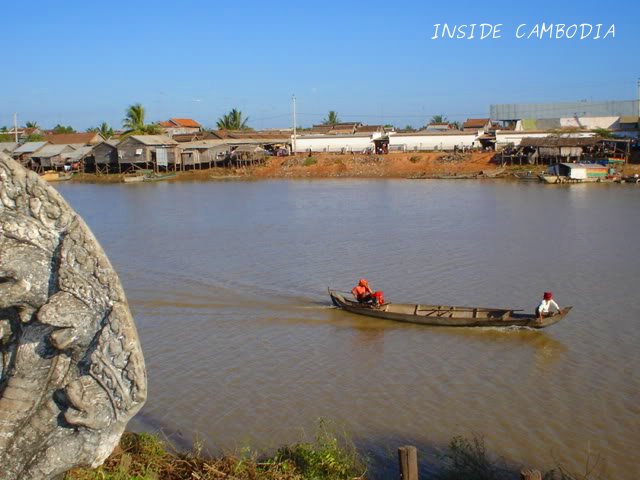
I took this photo very early in the morning at the provincial garden park. The weather was cool and the road quiet. Only afew people were walking about. I caught this motorised boat steadily making its way into the river. A little later, another boat passed by and on the boat were a group of young boys merrily rowing it.
This is my entry to this week’s Our World Tuesday. Click on the logo for more pictures of our world.
APAD 155: The red earth
After being powdered by the dust of summer comes the red, sticky mud of the rainy season, particularly in rural Cambodia.

I love the beautiful red clay soil in the countryside. Looks greasy from this angle but, no, it’s the thick, red, muddy road!
The mud is really harsh, and, as you can see, the road is virtually impassable – sticky, slippery, and will bury your vehicle (and you) if you’re stubborn enough to go on. Our shoes and flip-flops get coated with the sticky soil, and hardens like cement when it dries up, making them impossible to wear again.
This picture was taken in Kep, Cambodia in one of my field activities. I was based there for about 6months in 2006 and, I tell you, the rainy season added more challenge to the already very challenging work we were having at that time.
Huge props to the people on bicycles and motorcycles who patiently ply roads like this during the rainy season.

A Silver Finish!

Certified!



Follow Us!